
WeChat Numbers Are More Than a Phone Number
For an American student landing in Shanghai, Guangzhou, Chengdu, or any other big Chinese city, there is usually one very small question hiding behind a very large amount of stress: “What number do I give people on WeChat?”
At first, it sounds simple. In practice, “WeChat numbers” can mean several different things at once:
- Your mobile number used to register or recover an account
- Your WeChat ID, which is easier to share than a phone number
- Your QR code, the usual fast lane for adding someone in person
- Your friend count, group count, unread-message count, or payment-related alerts
- The verification prompts that pop up right when you are trying to pay for lunch, join a class group, or message a landlord
That little green app can become your campus noticeboard, taxi helper, apartment chat, restaurant queue, club flyer wall, and social calendar. It is not magic, though. It is a tool. And like any tool, it works much better when you know which number matters, which number is private, and which number you should never casually hand over.
The awkward moment is familiar: you meet a classmate at orientation, they say “Add me on WeChat,” and your mind does a tiny blue-screen reboot. Do you give your U.S. number? Show your QR code? Search their name? What if your account is still being verified? What if you add a stranger who starts pitching “investment opportunities” before you have even found the library?
Take a breath. You do not need a giant contact list to live well in China. You need a clean, trustworthy setup and a handful of useful groups. That is the whole ballgame.
The Numbers That Actually Matter for Daily Life
The first useful distinction is between your phone number and your WeChat identity.
Your phone number is generally part of account registration, login, security checks, and account recovery. Treat it like the key to your front door. Your WeChat ID and QR code, meanwhile, are usually more practical for day-to-day networking. If you are at a university event, a language exchange, or a job fair, showing your QR code is often quicker than spelling an American phone number several times over background noise.
A good starter routine looks like this:
- Register and secure your account using the phone number you control.
- Set a recognizable profile photo. A clear face photo is usually better than a cryptic meme when you are new.
- Use a simple display name that classmates and colleagues can identify.
- Keep your WeChat ID professional enough for school, work, and housing conversations.
- Share your QR code selectively rather than broadcasting your phone number everywhere.
This matters because WeChat is increasingly built around discovery, content, and recommendations—not merely one-to-one chat. On August 27, Tencent’s WeChat Vision team released WeMM-Embedding, a family of models designed to match text, images, video, and other content. According to the report, the technology was already used across WeChat Channels, Official Accounts, Moments, and e-commerce services [TechNode, August 27, 2026].
For everyday users, the practical takeaway is not “go become an AI researcher.” No need to put on a lab coat. It is this: the information you see and search for inside WeChat may increasingly connect words, pictures, videos, and products. That makes your digital housekeeping more valuable. A useful profile, sensible privacy settings, and organized chats help you keep signal separate from noise.
Build a small, useful contact network first
The rookie mistake is collecting contacts like baseball cards. You attend three events, scan 80 QR codes, and then spend the next month wondering who “Kevin Guangzhou 2” is.
Instead, aim for a compact first-circle network:
- Your program coordinator or international-student contact
- A trusted classmate from each important course
- Your building manager or housing contact, if appropriate
- A local friend who can explain everyday norms
- A reliable language-exchange partner
- A few activity groups: sports, study, hiking, food, volunteering, or professional networking
Give contacts a quick label or note after adding them. Something as simple as “Maya—MBA orientation—marketing” can save you later. WeChat gets messy fast; that is not a character flaw, it is just what happens when life happens inside one app.
For Americans used to email threads and separate apps for every task, this can feel like drinking from a fire hose. But after a few weeks, the convenience starts to click. Your class announcements may be in one group, your basketball run in another, and your neighborhood food recommendations somewhere between the two. Keep the groups that serve a real purpose. Mute the ones that do not.
Group Numbers: Bigger Is Not Always Better
A big WeChat group can be useful, especially during your first month. University cohorts, housing communities, and city newcomer groups often contain answers to questions you did not even know to ask: where to print documents, how to find a tailor, whether the campus gym needs advance booking, or which shop fixes a cracked phone screen without charging moon-landing prices.
But large groups also come with the usual internet weather: message floods, copied rumors, aggressive sales posts, and people who treat a community chat like their personal billboard.
Here is the streetwise rule: join groups for access, stay for value, leave when the value is gone.
Before joining, ask yourself:
- Who runs this group?
- Is there a clear purpose?
- Are members talking about real local life, or mostly forwarding links?
- Does anyone pressure newcomers to move money, share documents, or scan random QR codes?
- Can I find the group later through a trusted friend or official school channel if I leave?
The number of groups you belong to is not a scorecard. Ten useful groups beat fifty dead chats every time.
There is also a growing reason to think about how you share visual content. On August 28, a report described WeChat’s folded-image function, which lets users select three or more images and choose to display them as a swipeable card instead of flooding a chat with separate pictures [SMZDM, August 28, 2026].
That feature may sound small, but anyone who has watched a class group get buried under 24 nearly identical dinner photos knows the value of less clutter. For international students, it can be handy when sharing:
- Apartment-viewing photos with a roommate
- A few screenshots of course information
- Event photos after a club meeting
- Product photos when asking a friend for help with a purchase
- A compact visual update for family or friends
Just remember: folded does not mean private. Before sending images, check for visible addresses, passport pages, student IDs, payment QR codes, or other personal details. A neat photo bundle is still a photo bundle. Screenshots travel.
Verification, Privacy, and the “Don’t Get Cute With Security” Rule
Most account trouble comes from impatience. People change phones, use unfamiliar Wi-Fi, install unofficial software, tap a suspicious link, or rush through a verification prompt without reading it. Then, naturally, the app asks them to prove they are really themselves. Annoying? Yes. Mysterious? Not really.
Keep these basics boring and solid:
- Use the official WeChat app from a legitimate app store.
- Keep your linked phone number current whenever possible.
- Do not lend your account to another person.
- Do not share verification codes, login codes, or recovery details.
- Be cautious with QR codes that promise gifts, refunds, jobs, or “exclusive” group entry.
- Check privacy controls before posting personal information to Moments or groups.
- Use WeChat’s in-app Help Center and account-security options if you see unfamiliar login activity.
On August 28, ITHome reported on a joint call from 116 companies and organizations urging stronger cybersecurity defenses as AI capabilities develop [ITHome, August 28, 2026]. The article is not specifically about a WeChat account, but the underlying point lands close to home: security is no longer something to think about only after a problem appears.
For a student or newcomer, “stronger defense” does not have to mean expensive software or panic. It means slow down when someone pressures you. A stranger offering a part-time job, a coupon, a room, or a financial shortcut may be legitimate—or may be trying to move you outside normal channels where nobody can help. If the deal feels rushed, secretive, or strangely generous, step back. There will be another deal. There is always another deal.
If you need help with a payment feature, identity verification, account recovery, or a disputed transaction, start inside the relevant official in-app support pathway. Save screenshots, record dates and amounts, and avoid relying on “a guy in a group who knows a guy.” That road gets bumpy fast.
Use WeChat Like a Local Without Oversharing Like a Tourist
There is a nice middle ground between being too guarded and being too trusting.
You do not need to hide from every group. China can feel much smaller and friendlier once you have a few decent WeChat circles. The trick is to give people enough information to connect with you without handing strangers your whole life story.
A sensible profile for a U.S. student might include:
- A real first name or commonly used English name
- A straightforward photo
- A short note such as “Master’s student, 2026 intake” or “New in Chengdu”
- No passport number, full home address, banking details, or travel itinerary
- Privacy settings reviewed before accepting lots of new contacts
When you join a group, send a brief human introduction. Something like this works:
Hi everyone, I’m Jordan from the U.S. I’m studying design and just arrived in Hangzhou. Happy to join language exchanges, weekend hikes, and practical campus tips. Nice to meet you all.
That is enough. It gives people a conversation starter without turning your first post into a résumé, an autobiography, and a census form all rolled into one.
🙋 Frequently Asked Questions
Q1: Should I share my U.S. phone number or my WeChat QR code with new people?
A1: For casual social connections, your QR code is usually the cleaner choice. It is quick, avoids spelling out an international number, and lets you decide later whether to keep the connection.
Use this simple roadmap:
- Keep your phone number linked to your account for registration and recovery.
- Share your personal QR code when meeting classmates, neighbors, or activity-group members.
- Before adding someone, ask where you met and why they want to connect.
- Add a contact note immediately, such as “Leo—tennis group—Saturday.”
- If a person becomes pushy, commercial, or suspicious, use the in-app block and report tools.
For account settings or identity-related questions, use the official support and security options inside WeChat rather than following a third-party tutorial.
Q2: How many WeChat groups should a new international student join?
A2: Start with three to six groups that solve real problems. You can always add more later; leaving a group is easy, but managing a pile of noisy chats is a headache.
A good first-month mix is:
- One official academic or program group
- One housing or neighborhood group, if trusted
- One international-student community
- One hobby or sports group
- One local-language or cultural-exchange group
- One practical city group recommended by someone you know
After two weeks, do a quick cleanup. Mute groups with useful but frequent updates. Leave groups that are mostly advertisements, forwarded rumors, or pressure to buy something. Your attention is a limited resource—guard it like your last phone charger.
Q3: What should I do if WeChat asks for verification or I cannot log in?
A3: Do not repeatedly guess, borrow another person’s account, or pay a stranger for “unlocking” help. Start with the official recovery route in the app.
Follow these steps:
- Open WeChat and select the login or account-recovery option shown on screen.
- Use the phone number and account details connected to your account.
- Complete only the verification process presented through the official app.
- Check whether your phone number, device, and network connection are working normally.
- If the issue continues, use WeChat’s in-app Help Center or customer-support pathway and keep screenshots of error messages.
Never share codes sent to your phone. A real support process should not require you to hand a stranger your login credentials, recovery code, or payment information.
Q4: Is it safe to join a WeChat group through a QR code posted online?
A4: Sometimes, but treat open group QR codes as you would an unknown link in an email: possible, not automatically safe.
Before scanning:
- Check who posted the QR code and whether you recognize the organizer.
- Look for a clear group purpose, date, location, or community connection.
- Avoid groups that promise guaranteed money, private “insider” information, or urgent discounts.
- Do not send deposits or personal documents immediately after joining.
- Leave if moderators pressure you to add another account, download software, or move to a strange platform.
The best route is still a personal recommendation from a classmate, colleague, school contact, or established community organizer.
🧩 Conclusion
WeChat numbers are not really about chasing a bigger list of contacts. They are about making your daily life in China easier without making your private life easier for strangers to access.
For Americans and international students, the winning setup is pretty humble: a secure account, a shareable QR code, a recognizable profile, a few well-chosen groups, and enough common sense to ignore the too-good-to-be-true stuff. No dramatic hacks required.
Before your next semester, move, or social event, run this quick checklist:
- Confirm that your linked phone number and recovery details are current.
- Set a clear profile and save notes for important contacts.
- Join only groups with a real purpose and trusted source.
- Review privacy settings before sharing photos, documents, or payment information.
Small habits save big headaches. That is not glamorous, but neither is being locked out of your account while everyone else is ordering dinner.
📣 How to Join the Group
XunYouGu is built for the practical side of settling in: finding people who understand the tiny daily problems, swapping useful local tips, and making WeChat feel less like a maze.
Whether you are preparing for China from the United States, arriving for your first semester, or already here and tired of asking the same question into the void, you are welcome. The goal is simple: meet decent people, find useful groups, and make everyday life a little smoother.
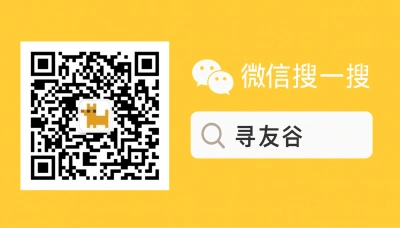
To join, open WeChat and search for “xunyougu.” Follow the official account, then add the assistant’s WeChat account to receive an invitation to a suitable group. Come in, say hello, and do not worry—we have all been the new person staring at a QR code at some point.
📚 Further Reading
🔸 WeChat Team Open-Sources WeMM-Embedding for Multimodal Search and Recommendation
🗞️ Source: TechNode – 📅 August 27, 2026
🔗 Read Full Article
🔸 WeChat’s Folded Image Feature Becomes a Popular Online Outfit Tool
🗞️ Source: SMZDM – 📅 August 28, 2026
🔗 Read Full Article
🔸 Technology Companies Call for Stronger Cybersecurity in the AI Era
🗞️ Source: ITHome – 📅 August 28, 2026
🔗 Read Full Article
📌 Disclaimer
This article is based on public information, compiled and refined with the help of an AI assistant. It does not constitute legal, investment, immigration, or study-abroad advice. Please refer to official channels for final confirmation. If any inappropriate content was generated, it’s entirely the AI’s fault 😅 — please contact me for corrections.