
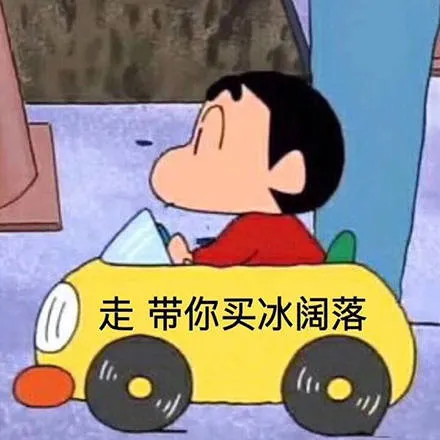
A Tiny WeChat GIF Can Save a Very Long Explanation
Picture this: it is 11:48 p.m. in Shanghai, Beijing, Guangzhou, or maybe a university dorm room after a long day of classes. Your WeChat group is busy planning dinner, a hiking trip, or a study session. Somebody writes a joke in Chinese. Everyone replies with stickers, laughing faces, and one very dramatic GIF of a cat falling off a chair.
You understand maybe 70% of the words. But the GIFs? Those are doing a surprising amount of the social work.
For Americans living in China—or getting ready to land with two suitcases and a brave face—WeChat is not just a messaging app. It is where classmates coordinate assignments, coworkers settle lunch plans, landlords send maintenance updates, clubs recruit members, and friends decide whether “maybe later” really means “absolutely not.” Learning how to use a WeChat GIF or sticker is not about becoming an internet comedian. It is about reading the room and replying in a way that feels warm, low-pressure, and normal.
That said, do not force it. A badly timed GIF can land like showing up to a quiet library in flip-flops and a Bluetooth speaker. The smart move is to understand the difference between a casual friends’ group, a school group, a work group, and a service chat. Different rooms, different rules.
There is also a practical reason visual communication matters more now. Tencent’s WeChat Vision team said its open-sourced WeMM-Embedding models support matching across text, images, videos, and other content types, and that related technology is already used across WeChat Channels, Official Accounts, Moments, and e-commerce services [TechNode, August 27, 2026]. In plain English: WeChat is becoming even more visual and content-aware. Knowing your way around a good GIF, sticker, or image reply is a small skill with outsized everyday value.
The WeChat GIF Playbook: Friendly, Useful, and Not Too Much
First, a quick reality check: on WeChat, people often say “GIF” when they mean several different things:
- An animated image sent in a chat
- A built-in animated sticker or emoji
- A saved custom sticker made from a GIF, video clip, or image sequence
- A short visual reaction that replaces a written reply
- A collection of images sent together for a visual update
These are not identical, and WeChat behavior can vary by device, app version, file type, and chat setting. If you send something and it appears as a still image rather than an animation, do not sweat it. That is usually a technical limitation, not a social disaster. Try sending it as a sticker, use WeChat’s built-in sticker panel, or test it in a chat with a friend first.
Why stickers often beat words
Chinese chat culture can be wonderfully efficient. A sticker may say “I saw this,” “I am embarrassed,” “I agree,” “I am crying laughing,” or “Please give me five minutes” without demanding a whole paragraph in Chinese.
For a newcomer, that can be gold. You do not have to type a perfectly polished response every time. A well-chosen visual reply can show that you are present in the conversation while you are still building vocabulary.
A few common use cases:
- Friends making plans: Use a happy or approving sticker after agreeing to a time and place.
- Student group chat: Use a simple thumbs-up or “received” sticker after somebody shares lecture notes.
- Language exchange: Send a playful reaction after a harmless joke, then ask what a phrase means.
- Work chat: Use restrained reactions only, and follow up with clear text when action is needed.
- Buying and selling: Keep it plain. A written confirmation of price, item, location, and time is much safer than a smiling GIF.
Here is the streetwise rule: a GIF can soften a message, but it cannot replace important information. If you are confirming a class deadline, a payment amount, an address, or a meeting time, write the details clearly. Cute panda energy is not a contract.
Read the group before you perform in it
Every WeChat group develops its own rhythm. A group of international students may use memes all day. A research group may be polite but fairly dry. A workplace group could be relaxed at lunch and very formal at 9:00 a.m. Monday. The same sticker can feel funny in one place and wildly out of place in another.
Before dropping your own animated masterpiece, spend a couple of days observing:
- Notice frequency. Are people sending one sticker per conversation, or ten per minute?
- Notice hierarchy. Do teachers, supervisors, or group organizers use stickers themselves?
- Notice style. Are the visuals cute, sarcastic, formal, absurd, or mostly practical?
- Match the temperature. Start lighter than the regulars, not louder.
- Use text for commitments. “I will arrive at 6:30 at Exit B” beats any reaction image.
This is not about walking on eggshells. It is basic social intelligence. Most people appreciate an international friend who is making an effort, especially one who does not turn every group chat into a personal meme channel.
Make your own WeChat sticker without making it cringe
A custom sticker can be a great icebreaker. Maybe it is a photo of your friend’s dog, a tiny animation of your campus mascot, or a quick reaction face from your own life. Keep it clean, kind, and easy to understand.
A practical workflow looks like this:
- Choose a simple source. Use an image or short animation you own, or content you have permission to use.
- Avoid sensitive personal material. Do not turn someone else’s photo into a sticker without asking them. That may be funny for five seconds and uncomfortable for five months.
- Keep the visual readable. Tiny text, busy backgrounds, and long jokes do not travel well in a small sticker.
- Send it to yourself or a trusted friend first. Check whether it displays and animates properly.
- Use it sparingly at the beginning. Let the group decide whether it becomes “your thing.”
If you want to save a received sticker, press and hold it in a chat and look for the option to add it to your favorites or sticker collection. Exact labels can differ by platform and language settings, so take a second to explore your own version of the app.
One good custom sticker is memorable. Fifty nearly identical ones are digital clutter. Nobody needs that kind of chaos before breakfast.
GIFs are not the only visual move in town
A recent WeChat feature for sending multiple photos in a folded, swipeable display has been picked up by users as a handy way to share outfits and visual updates rather than flooding a chat with separate images [SMZDM, August 28, 2026]. That is a useful lesson for newcomers: when you need to share several images, consider grouping them neatly instead of dropping photo after photo into the chat.
For example, if you are asking classmates which jacket works for a themed event, send a compact set of photos with one clear question: “Which one looks best for Saturday?” If you are looking for an apartment, keep property photos and questions organized. If you are sharing a travel plan, use a short written summary beside the images.
Visual messages work best when they reduce friction. They should make it easier for people to respond, not give them a scavenger hunt.
Keep your funny stuff separate from your private stuff
A GIF may feel harmless, but chat media can contain more information than people realize. A screenshot can reveal names, payment records, locations, contact details, class schedules, or private jokes that were never meant to leave a group.
The broader online-security conversation is moving in the same direction: on August 27, 2026, 116 organizations signed a joint letter calling for stronger cybersecurity efforts as AI-enabled threats develop [ITHome, August 28, 2026]. You do not need to become a cybersecurity professional to take the basic lesson: pause before sharing.
Before forwarding a GIF, screenshot, or chat image, run this quick check:
- Does it show someone’s phone number, WeChat ID, address, or payment details?
- Was it posted in a private group?
- Could it embarrass a classmate, colleague, customer, or host?
- Do I have the creator’s permission to repost it?
- Would I be comfortable if this showed up in a public group tomorrow?
If the answer feels shaky, leave it alone. There will always be another cat GIF.
🙋 Frequently Asked Questions
Q1: How do I send a WeChat GIF if I am new to the app?
A1: Start with the built-in sticker tools; it is the easiest route and usually works more reliably than hunting random files online.
- Open a one-to-one chat or group chat.
- Tap the emoji or sticker icon beside the message field.
- Browse the available stickers, GIF-like reactions, and emoji packs.
- Tap one to send it.
- To save a sticker somebody sends you, press and hold it, then select the available save or add-to-favorites option.
For your first week, use simple reactions: thumbs-up, laughter, thanks, agreement, or a friendly hello. Once you know the group’s vibe, you can branch out. No need to speedrun internet culture on day one.
Q2: Why does my WeChat GIF sometimes send as a still picture?
A2: This can happen because of file format, file size, device settings, app version, or the way the animation was imported. Try this troubleshooting roadmap:
- Step 1: Update WeChat through your phone’s official app store.
- Step 2: Send the file to yourself or a close friend as a test.
- Step 3: Try the built-in sticker panel instead of attaching the GIF as a general image file.
- Step 4: Use a shorter, smaller animation with fewer frames.
- Step 5: If it still fails, convert it into a short video or use a static image with a short caption.
When you need an official answer about an account or app function, use WeChat’s in-app Help Center or customer-support pathways shown inside the app. Third-party “fixes” that ask for your login, verification code, or payment information are a hard pass.
Q3: Is it okay to use GIFs and stickers in a Chinese workplace WeChat group?
A3: Usually yes—but follow the group’s established tone. In a work setting, clear information comes first and visual reactions come second.
Use this simple decision guide:
- Okay: acknowledging a routine update with a modest thumbs-up or “received” sticker when others do the same.
- Better in text: confirming a schedule, task ownership, location, invoice, payment, or deadline.
- Avoid: jokes during urgent requests, overly sarcastic memes, repeated animations, or anything personal about coworkers.
- When unsure: mirror the style of your direct supervisor or group organizer.
A safe template is: “Received, I will send the draft by 3 p.m.” Then, if the group is casual, add one small friendly reaction. That combination is professional and human.
Q4: Can I make a sticker from a friend’s photo or a classroom screenshot?
A4: Ask first. It takes ten seconds and prevents a headache later.
A respectful process:
- Send a direct message: “This photo is hilarious—in a good way. Mind if I make it into a sticker?”
- Wait for a clear yes.
- Do not use photos involving children, private homes, documents, payments, or sensitive conversations.
- If the person changes their mind, delete it and stop sharing it.
For school or workplace screenshots, the answer should generally be no unless the content is already meant for public sharing and all visible personal details have been removed.
🧩 The Bottom Line: Small Visual Skills, Smoother Daily Life
This guide is for Americans and other international students who want to feel less like spectators in WeChat and more like comfortable participants. A WeChat GIF will not solve every language problem, obviously. But it can make everyday conversations friendlier, lower the pressure around short replies, and help you catch the emotional tone behind the words.
The winning approach is simple: be warm, be observant, and do not confuse “funny” with “appropriate.” China is big, WeChat groups are varied, and every circle has its own code. Learn the code before trying to rewrite it.
Keep this short checklist handy:
- Use built-in stickers first and test custom GIFs with a friend.
- Watch how each group communicates before posting heavily.
- Put important plans, prices, addresses, and deadlines in clear text.
- Protect privacy before forwarding any image, sticker, or screenshot.
That is the whole ballgame. A little digital manners goes a long way.
📣 Join a WeChat Group That Actually Helps
Life in China gets easier when you can ask real people practical questions: Which app works for this? How do I explain this to my landlord? Where do students find a decent language exchange? What does that mysterious sticker actually mean?
That is why XunYouGu exists. Since 2018, XunYouGu has aimed to help international friends use WeChat more comfortably for daily life, work, study, and social connection in China. No magic promises, no nonsense—just a friendly place to find people who have probably dealt with the same little puzzles.
To join, open WeChat and search “xunyougu.” Follow the official account, then add the assistant’s WeChat account to receive an invitation to the appropriate group. Bring your questions, bring your curiosity, and maybe bring one genuinely good sticker.
📚 Further Reading
🔸 WeChat Team Open-Sources WeMM-Embedding for Multimodal Search and Recommendation
🗞️ Source: TechNode – 📅 August 27, 2026
🔗 Read Full Article
🔸 WeChat’s Folded-Image Feature Becomes a Styling Tool for Users
🗞️ Source: SMZDM – 📅 August 28, 2026
🔗 Read Full Article
🔸 116 Organizations Call for Stronger Cybersecurity Action in the AI Era
🗞️ Source: ITHome – 📅 August 28, 2026
🔗 Read Full Article
📌 Disclaimer
This article is based on public information, compiled and refined with the help of an AI assistant. It does not constitute legal, investment, immigration, or study-abroad advice. Please refer to official channels for final confirmation. If any inappropriate content was generated, it’s entirely the AI’s fault 😅 — please contact me for corrections.